I didn’t leave Canada because of politics. I left because my body couldn’t function well in that climate. Seasonal Affective Disorder is a biological response to prolonged light deprivation, and in Canada it shaped my life far more than I wanted to admit. Looking back, the pattern began early. By grade eight, winter depression had already taken hold—I spent long hours crying alone in my room, unable to explain why everything felt so heavy. When I finally tried to talk to my mother about it, she told me I had nothing to cry about. I learned then to keep such matters to myself. As the years went on, each winter brought the same predictable shutdown—my energy, my mood, my sense of hope. This wasn’t a mindset problem or a lack of resilience. Each winter brought predictable patterns of depression, fatigue, food cravings, weight gain and emotional withdrawal, despite doing all the “right” things. Eventually, I had to accept a truth that was hard to say out loud: staying wasn’t a strength—it was making me sick.
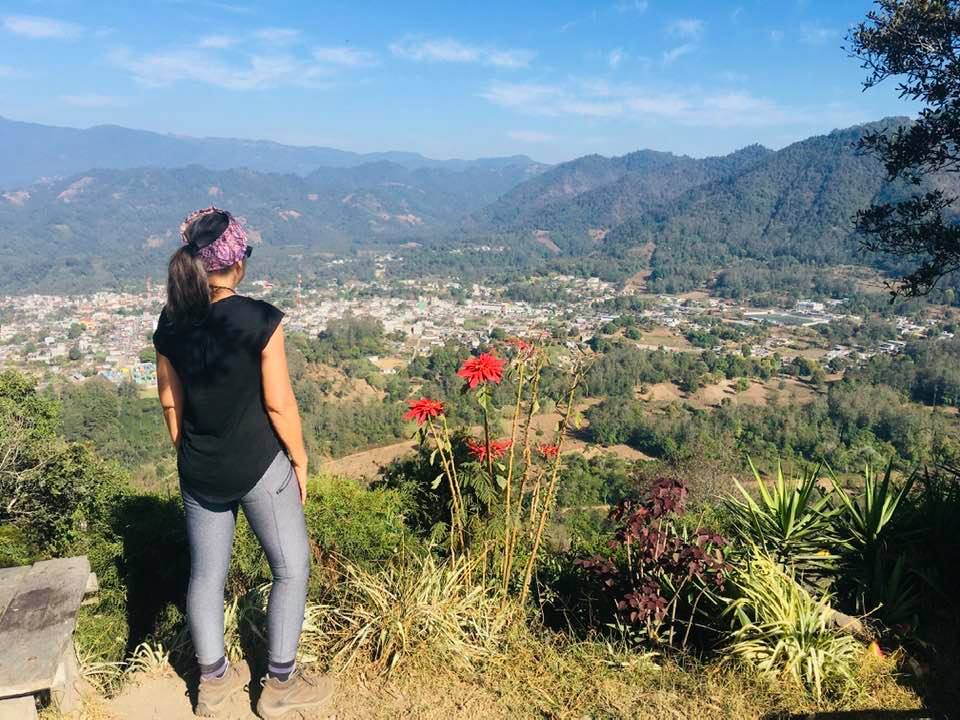
Summers in Canada told a very different story. I lived almost entirely outdoors, especially near water. I was always eager to get to the beach early and reluctant to leave, as if my body were quietly begging for as much sunlight as possible. Hiking, gardening, and spending long hours by the lake or the ocean felt less like hobbies and more like a form of restoration. I noticed that my need to be outside seemed stronger than others—not as a preference, but as a necessity. In the summer, I felt more like myself, without fully understanding why. Only later did I realize that the version of me that thrived in summer was the same one that disappeared each winter.
For a long time, I tried to normalize what was happening. Winter blues were expected. Low energy was brushed off. Weight gain, sugar cravings, and social withdrawal were treated as seasonal inconveniences rather than warning signs. I learned to doubt myself, to compare my experience to people who seemed to cope just fine, and to wonder why I couldn’t. I told myself that if others could endure it, I should be able to too. So I adjusted my expectations downward every year, quietly accepting a smaller life for more than half the calendar.
The most unsettling part was how precise the cycle was. As daylight faded in late fall, my world narrowed. Motivation dropped. My thinking became heavier and slower. Tasks that felt manageable in summer became overwhelming. I withdrew socially—not because I didn’t care, but because everything required more energy than I had. What scared me most wasn’t how bad I felt, but how predictable it was. Same symptoms. Same timeline. Year after year. This wasn’t random sadness or situational stress. It was a pattern my body repeated with precision.
When I tried to talk about it, the response was rarely supportive. My pleas were met with blank stares. Many would respond with how much they loved winter. That I just needed to try harder, be more positive, or push through it like everyone else. Even well-meaning people minimized or ignored what I was experiencing, and over time, I stopped bringing it up at all. Instead of feeling helped, I felt dismissed—and then ashamed. I began to internalize the idea that needing a different environment meant something was wrong with me, rather than recognizing that I was asking for understanding from people who didn’t have the capacity to give it.
Like many people with Seasonal Affective Disorder, I tried everything I was supposed to try. Light therapy. Supplements. Exercise. Therapy. Strict routines. Better discipline. And while some of these things helped at the margins, none of them changed the fundamental pattern. Every winter still felt like a purgatory that I had to survive rather than live through. The unspoken expectation was that if I just found the right combination of tools, I could override my biology. When that didn’t work, the failure felt personal.
At its core, Seasonal Affective Disorder is driven by how the brain and nervous system respond to light. Reduced daylight disrupts circadian rhythm, which governs sleep–wake cycles, hormone release, and energy regulation. Lower light exposure alters serotonin activity, affecting mood and emotional stability, and also impacts dopamine, which plays a key role in motivation, pleasure, and reward-seeking behaviour. Melatonin production increases as well, contributing to fatigue and sleep disruption. Together, these changes can lead to depression, lethargy, increased appetite—especially for carbohydrates—reduced motivation to move, and cognitive slowing. Latitude matters: the farther north you live, the more extreme the seasonal light shifts become. For light-sensitive people like myself, this isn’t a mild inconvenience but a significant physiological stressor. Some bodies are more dependent on consistent, strong daylight to function well. Once I understood that, my experience stopped feeling like a personal deficiency and started making sense. I wasn’t weak or undisciplined, just living in an environment that conflicted with my biology. No amount of positive thinking can override a nervous system that lacks the environmental input it needs to regulate itself properly.
Sunlight wasn’t a luxury for me. It was medicine.
That realization came with grief, but also relief. Grief for the years I spent forcing myself to adapt, telling myself that needing sunshine was indulgent or dramatic. Grief for how much energy I poured into managing symptoms instead of living fully. But there was also relief in finally having language for what I had been experiencing all along. Relief in knowing that I could stop fighting my own physiology.
Leaving Canada wasn’t an impulsive decision, and it wasn’t an escape. It was a recalibration. It meant letting go of more frequent visits with family and friends, a culture I identified with, and an idea of who I thought I was supposed to be. It meant accepting that health might require a different geography—and that honouring that need wasn’t a failure of will, but an act of responsibility.
What surprised me most after leaving was not just how much better I felt, but how quickly my baseline changed. Energy returned. Mood stabilized. Cravings quieted. Belly fat disappeared. My nervous system stopped living on high alert. I didn’t feel euphoric or magically fixed—I felt normal. Functional. Like myself. The contrast made it impossible to deny what winter in Canada had been costing me.
This is the part of the story that can make people uncomfortable. We like narratives of endurance. We admire people who push through, adapt, and overcome. But not every problem is meant to be solved with grit. Sometimes the most self-respecting choice is to stop forcing your body into conditions it clearly can’t tolerate. Sometimes the bravest thing you can do is listen and take action.
I know there are many people still living in places that quietly make them unwell—especially those with Seasonal Affective Disorder who have learned to minimize their symptoms because they’re common, seasonal, or inconvenient to acknowledge. If that’s you, I want you to know this: needing light is not a weakness. Wanting to feel well year-round is not asking too much. And choosing an environment that supports your nervous system is not giving up—it’s growing up.
Sometimes we take the road less travelled because it is the best road for us.
Leaving Canada didn’t mean rejecting winter, or the people who thrive in it. It meant accepting myself honestly. It meant understanding that health is contextual, and that what works beautifully for one body can be harmful for another. Most of all, it meant trusting my own experience, even when others didn’t. I didn’t leave because I couldn’t handle it. I left because I finally listened.
 I have been working as a health coach since 2014, supporting a wide range of clients on their healing journeys. Many of the people I work with are navigating complex, chronic conditions such as Lyme disease and co-infections, parasites, chronic fatigue syndrome, fibromyalgia, mental health challenges, food addiction, insulin resistance and gut healing. I also work with individuals who simply want to lose weight, restore their energy, and become a healthier, happier version of themselves.
If you would like support navigating your way back to health and vitality, feel free to send me a message here.
Blessings and best of health,
Brenda
Wow!
I love your last few posts and completely relate in so many ways.
Thank you for sharing your story, I needed to hear it!
I don’t get depressed in winter but my body needs to live where one can nurture better body voltage.
Salt water, sand, sunshine, more sunsets/red light, kind culture and community, fresh food from my local community…
Ive always wanted to live in a more vibrant culture.
I have travelled a bit and one can find the sun in many places but finding kind hearted community is such a blessing.
I believe that when we honour what our body asks for, and honour what our heart asks for, health follows.
The journey has been long.
I’m at a place where I will no longer plead for support, nor plead for others to recognize my needs.
See you on the trails sister!
Thanks so much! We are more sun dependant than we know. I think intuitively we all know what we need to get healthy and happy. Sun therapy is powerful! Happy trails!
Lovely to hear you continue to do well. Can you share the general area of the world that you’ve relocated to? SAD runs in my family, and I wonder how much it affects me.
Hi Anette – Thanks for your comment. I am currently on the Pacific Coast in Mexico. Start doing a bit of research on SAD and see if it resonates with you. Blessings B